By James Murray-Hodcroft
25th September 2025
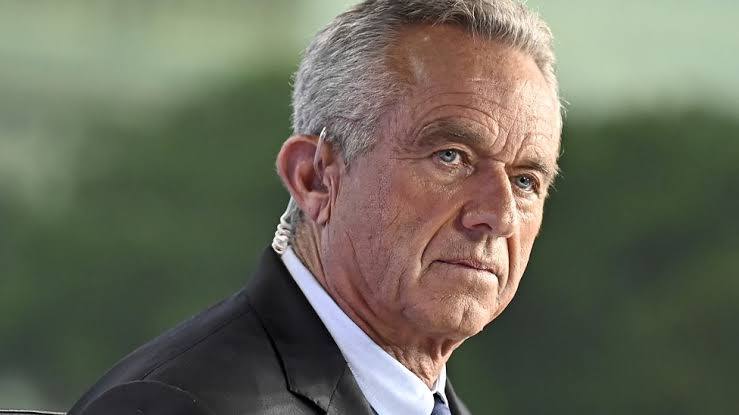
Robert F. Kennedy Jr., whose financial disclosures reveal referral fee arrangements with law firms suing vaccine manufacturers. His dual role as a public health figure and a private beneficiary of pharmaceutical litigation has raised questions over potential conflicts of interest.
Credit: BBC News
Washington, D.C. — Robert F. Kennedy Jr., one of the Trump administration’s most visible health-policy voices, has earned more than $850,000 in referral fees from lawsuits against pharmaceutical companies; even as he publicly pushes an unapproved treatment for autism that could benefit drug manufacturers.
Ethics disclosures, Senate letters, and recent media reports confirm Kennedy has referral agreements with law firms including Wisner Baum and Morgan & Morgan, entitling him to 10% of the legal fees from clients he directs to them. Those firms have spearheaded litigation against Merck, the maker of the HPV vaccine Gardasil. Kennedy’s public opposition to vaccines, and his financial stake in lawsuits against their manufacturers, has raised alarms over whether his political advocacy is inseparable from his private profit.
How the money flows
Unlike flat “finder’s fees,” Kennedy’s referral income is tied to contingency cases , lawsuits where lawyers only get paid if the client wins or a company settles out of court. If a settlement occurs, even without an admission of wrongdoing, the firm still takes its percentage, and Kennedy receives his cut.
That structure creates a powerful incentive: the more distrust Kennedy generates toward vaccines, the more pressure companies like Merck face to settle quickly in order to contain reputational harm. Critics argue that Kennedy, through his profile, can amplify that pressure, and profit directly from the outcome.
In a Feb. 5, 2025 letter, Senators Elizabeth Warren and Tim Kaine warned that Kennedy’s ties to plaintiff firms and regulated entities “will raise serious doubts about your impartiality,” noting he could even influence “Merck’s willingness to settle” and thereby increase payouts “for yourself” through referral fees.

A February 5, 2025 letter from U.S. Senators Elizabeth Warren and Tim Kaine to Robert F. Kennedy Jr., warning that his financial ties to vaccine-related lawsuits pose “serious conflicts of interest” if he serves as Secretary of Health and Human Services. Source: Warren.senate.gov
Settlements and secrecy
Most pharmaceutical liability cases end not with jury verdicts but with confidential settlements. Legal analysts note that companies often pay to avoid prolonged trials, mounting legal bills, or damaging headlines.
Although Merck has not confirmed settlements in the Gardasil litigation, plaintiff-oriented firms state that “most cases resolve through settlement,” and Kennedy’s disclosure of more than $850,000 in referral income between 2023 and 2024 suggests he has already profited from such arrangements.
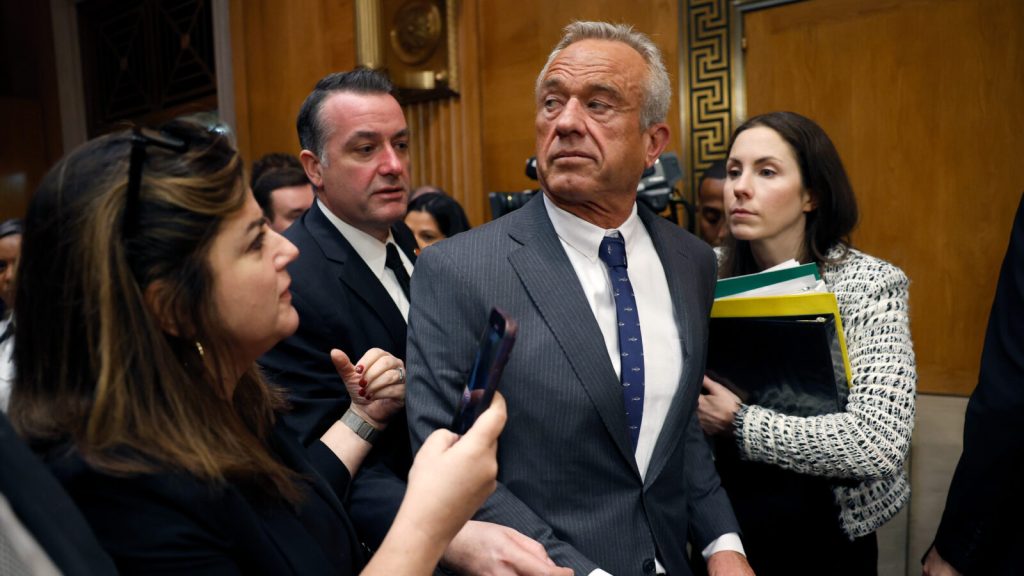
Robert F. Kennedy Jr. leaves a Senate hearing in Washington, D.C., after facing questions over his financial ties to lawsuits against vaccine manufacturers. His nomination as Secretary of Health and Human Services has drawn scrutiny from lawmakers and ethics watchdogs.
Credit: STAT News
One case in Los Angeles was halted mid-trial in February 2025, with the parties agreeing to restart later in the year; a move Reuters described as linked to the intense scrutiny surrounding Kennedy’s confirmation as Health and Human Services Secretary. While not proof of a settlement, such halts often precede out-of-court deals.
Promoting Leucovorin
The conflict intensified when Kennedy and President Donald Trump jointly promoted Leucovorin (folinic acid) as a treatment for autism earlier this month. Leucovorin is approved as a chemotherapy rescue drug but not by the FDA for autism. Small clinical studies have suggested benefits for some children with cerebral folate deficiency, but experts caution the evidence is preliminary.
Currently, leucovorin is manufactured by companies including Fresenius Kabi, Sagent, and Hikma, with no public record of Kennedy personally holding shares or board positions. However, critics say his public endorsement risks steering desperate families toward a therapy lacking robust clinical validation; while distracting from his financial entanglements in vaccine litigation.
The circle around Kennedy
Though Kennedy himself has no documented ties to leucovorin manufacturers, figures close to him in the “Make America Healthy Again” (MAHA) movement have overlapping financial interests in wellness and pharmaceutical-adjacent businesses.
- Calley Means, a Kennedy ally, has profited from ventures in the wellness sector, which itself benefits from public distrust in mainstream pharmaceuticals.
- Donald Trump Jr. sits on the board of BlinkRx, a company that partners with drug manufacturers to streamline prescription access. While not tied to leucovorin specifically, BlinkRx operates in the pharmaceutical distribution space.
The optics are clear: Kennedy’s rhetoric against “Big Pharma” coexists with a network that profits when patients seek alternative health solutions or new uses for existing drugs.
Why it matters
Kennedy’s defenders argue he has disclosed his ties and pledged to step back from conflicts in government. They stress there is no evidence of unlawful conduct. But the perception problem is undeniable: as a government official, Kennedy is simultaneously discouraging vaccine uptake, earning referral fees from lawsuits against vaccine makers, and promoting an alternative drug with powerful allies in pharma-adjacent businesses.

Timeline illustrating the overlap between Robert F. Kennedy Jr.’s referral fee agreements, the expansion of Gardasil vaccine litigation, his public anti-vaccine advocacy, and the promotion of leucovorin for autism. Credit: TheHodlines.co.uk
“This is not about illegality; it’s about trust,” said one Georgetown ethics scholar. “If the public cannot be certain whether a health official’s words are guided by science or by profit, confidence in public health collapses.”
The bigger picture
In an era of deep mistrust in institutions, Kennedy’s dual role as a political leader and a private beneficiary of pharmaceutical litigation highlights how blurred the line between advocacy and profit has become. For families navigating vaccines, autism treatments, and public-health messaging, the stakes are far more than financial.
As the Trump-Kennedy partnership continues to champion Leucovorin, the question lingers: is this public health policy; or profitable advocacy by another name?
 The Hodlines: Investigative Journalism