By James Murray-Hodcroft
Published: 20th August 2025
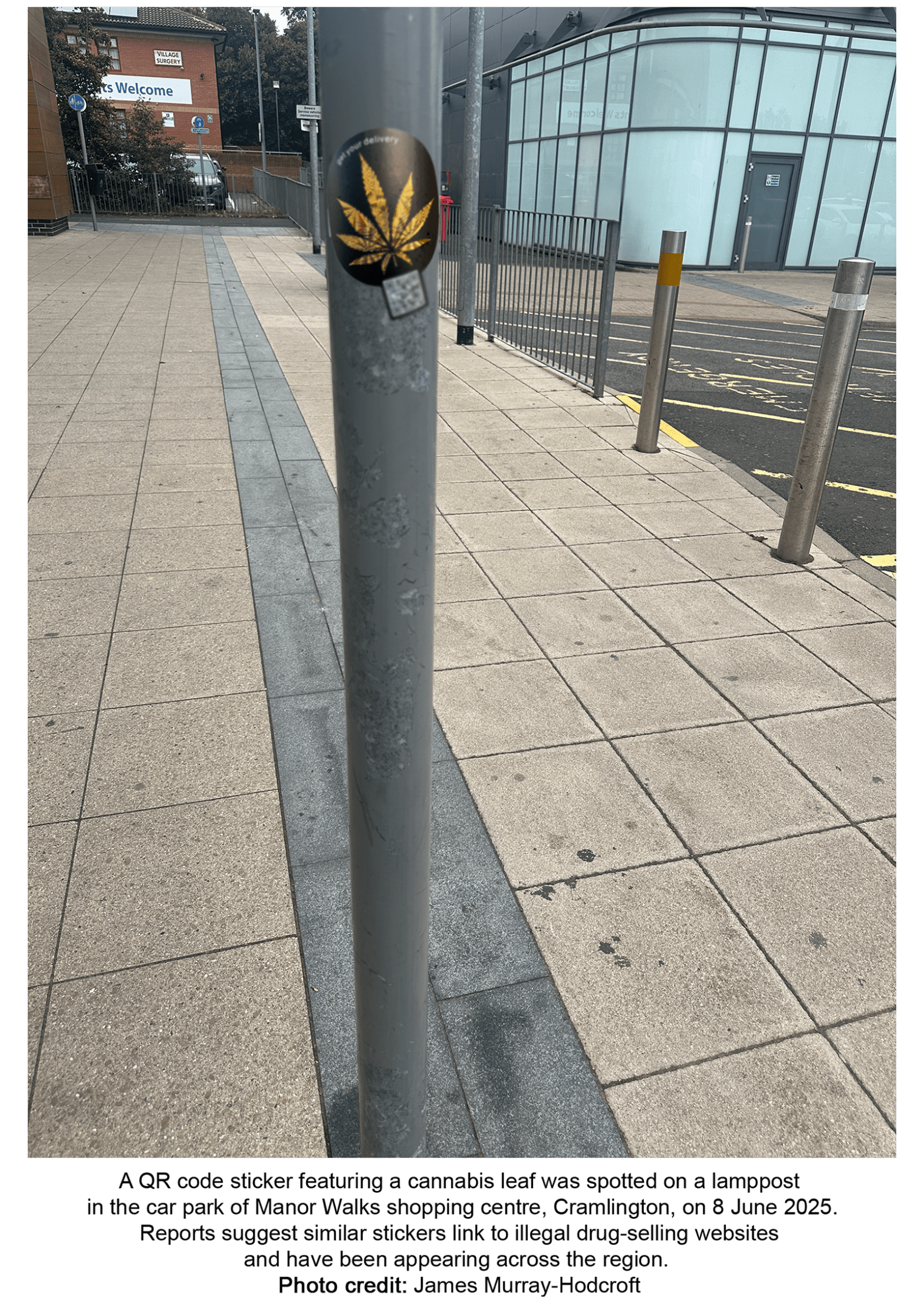
QR code stickers linking to illegal drug-selling websites have been spotted around Manor Walks shopping centre in Cramlington, sparking fresh concerns about youth safety, retail crime, and increasingly sophisticated tactics used by dealers.
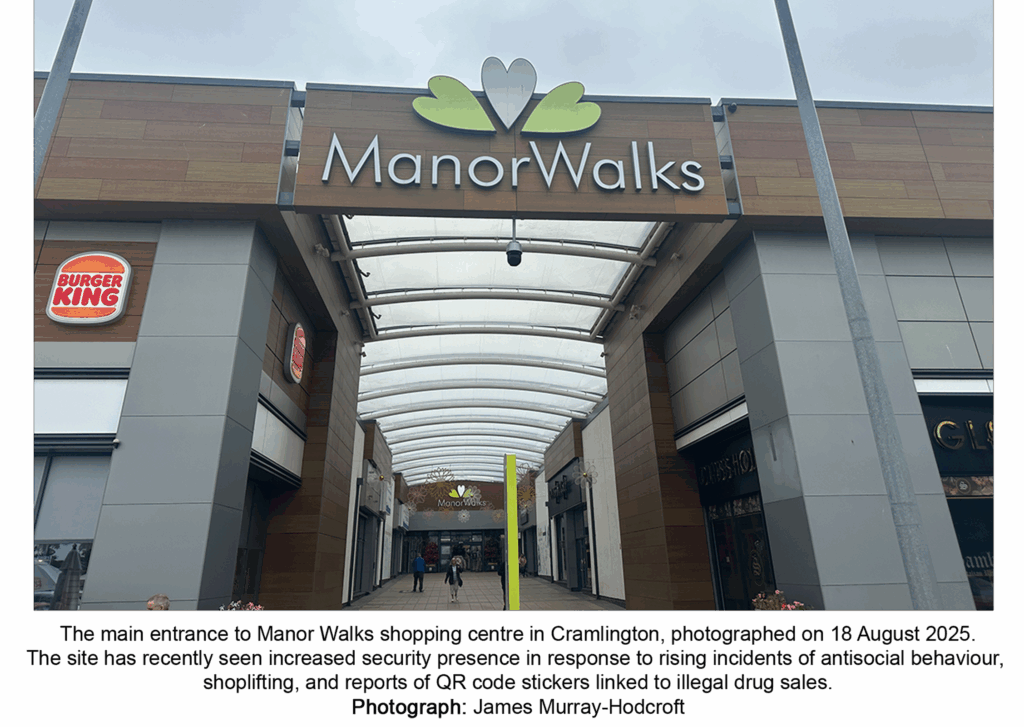
Retail workers at the centre, already under pressure from rising theft and abusive behaviour, say the appearance of these stickers highlights a broader shift in the way drugs are being marketed and accessed; particularly by younger people.

Jack Matheson, 20, who works as a retail assistant at the centre, said he has seen a clear escalation since starting just ten months ago.
Every week, large groups of teenagers and even younger kids come in here to abuse staff and steal things. It’s crazy. How can we be here? How is it so common that you can just walk down the street, scan a QR code and buy weed; or something worse?”
— Jack Matheson, Retail Assistant
Site security staff declined to comment, but workers confirm security patrols have been increased in response to a noticeable surge in antisocial behaviour.
A former retail assistant at Manor Walks’ B&M, who asked not to be named after previously being targeted, told The Hodlines they believe the stickers have contributed to the problem:
“It’s like they don’t even have to hide what they’re doing anymore.”
— Former B&M Employee
The staff member described one incident where they caught a woman attempting to steal a hot tub:
“She could barely lift it, but she was desperate. People are risking bigger thefts now, and a lot of it’s tied to drugs.”
Organised crime networks
Concerns over QR-coded drug sales follow a Sky News investigation in May, which revealed that an Eastern European organised crime gang is operating a nationwide drug delivery system.
Orders placed via these codes are reportedly fulfilled within 24 hours via Royal Mail, suggesting stockpiles are being distributed from within the UK.
The stickers are particularly difficult to trace. Each QR code typically expires within hours, and the linked websites are decommissioned and relaunched repeatedly, making enforcement challenging.
Concerns for young people
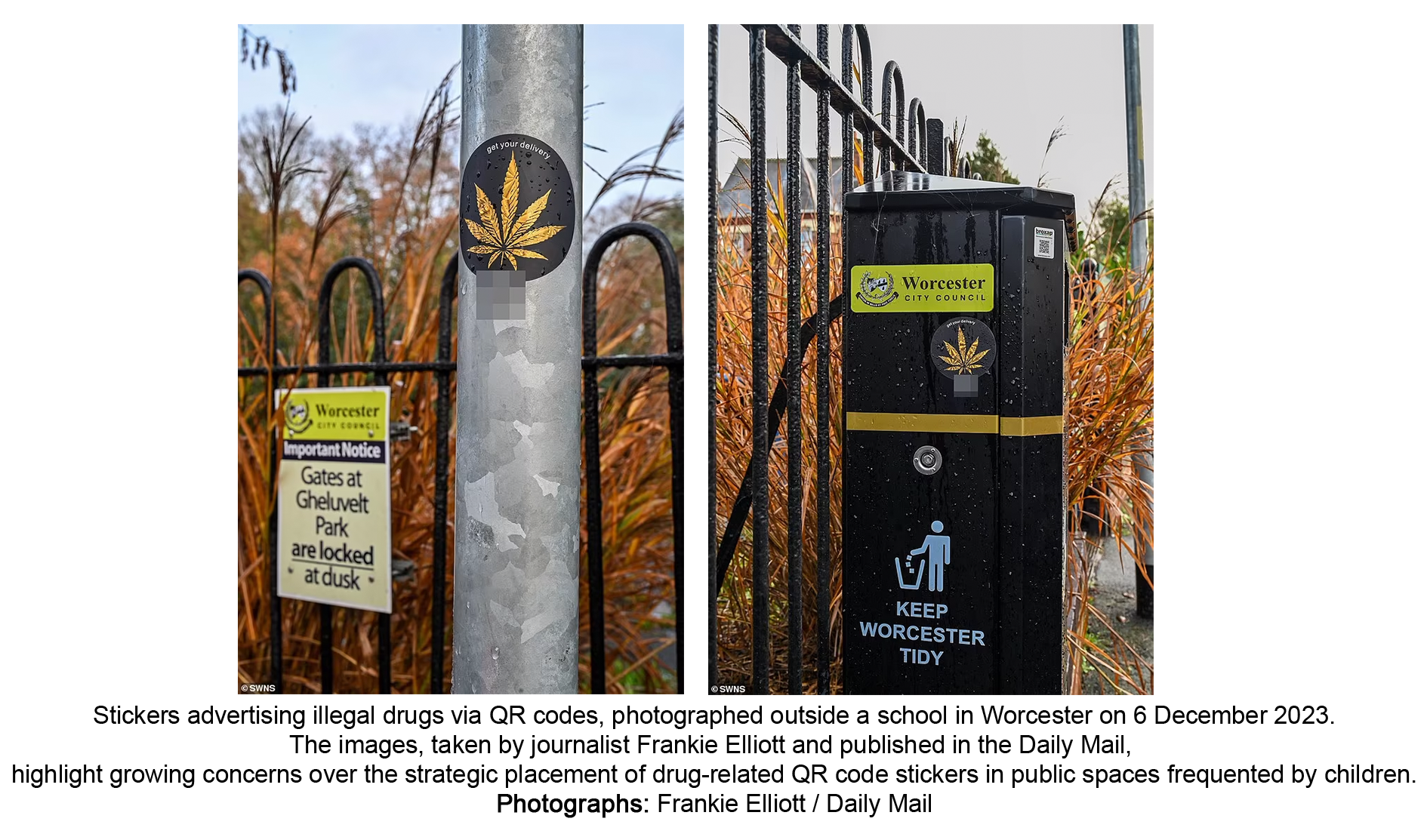
Residents have reported spotting children as young as nine scanning the stickers. The codes are often placed along routes frequented by school-aged children, raising fears about deliberate targeting.
In Worcester, similar stickers were reported outside schools, and locals worry that the same trend could reach Cramlington.
Vicky Wilson, manager of Leading Link, a children’s charity based in Blyth, worked directly with young people at Manor Walks last year.

“The security guards knew every child we engaged with by name; they were all considered ‘troublemakers’. But those kids don’t wake up wanting to be a problem. They’re bored, often unsupervised, and things like this are designed to attract their attention,” she said.
Wilson explained that many children spend long, unsupervised hours in groups after school:
“They’re not being watched. There’s nobody at home asking where they are or what they’re doing. Parents need to be aware of this (Drug-dealing stickers).”
Tech awareness and parental responsibility
Eleanor Baggaley, who also works with Leading Link, urged parents to be more tech-aware:
“Most won’t think to check browser history, but QR codes can bypass many safety tools on children’s phones,” she said.

Baggaley added that even the Online Safety Act, which came into effect this year, relies on websites being correctly categorised:
“Dealers are already finding ways around the filters.”
— Eleanor Baggaley, Leading Link
Wider problem
The stickers have been appearing across the UK for over two years, but sightings in Teesside and now Cramlington indicate the issue is moving north.
With the short lifespan of each QR code and constant site rotation, questions remain about just how profitable this model must be to justify such bold, public tactics.
Northumbria Police were contacted for comment but declined to respond.
 The Hodlines: Investigative Journalism